
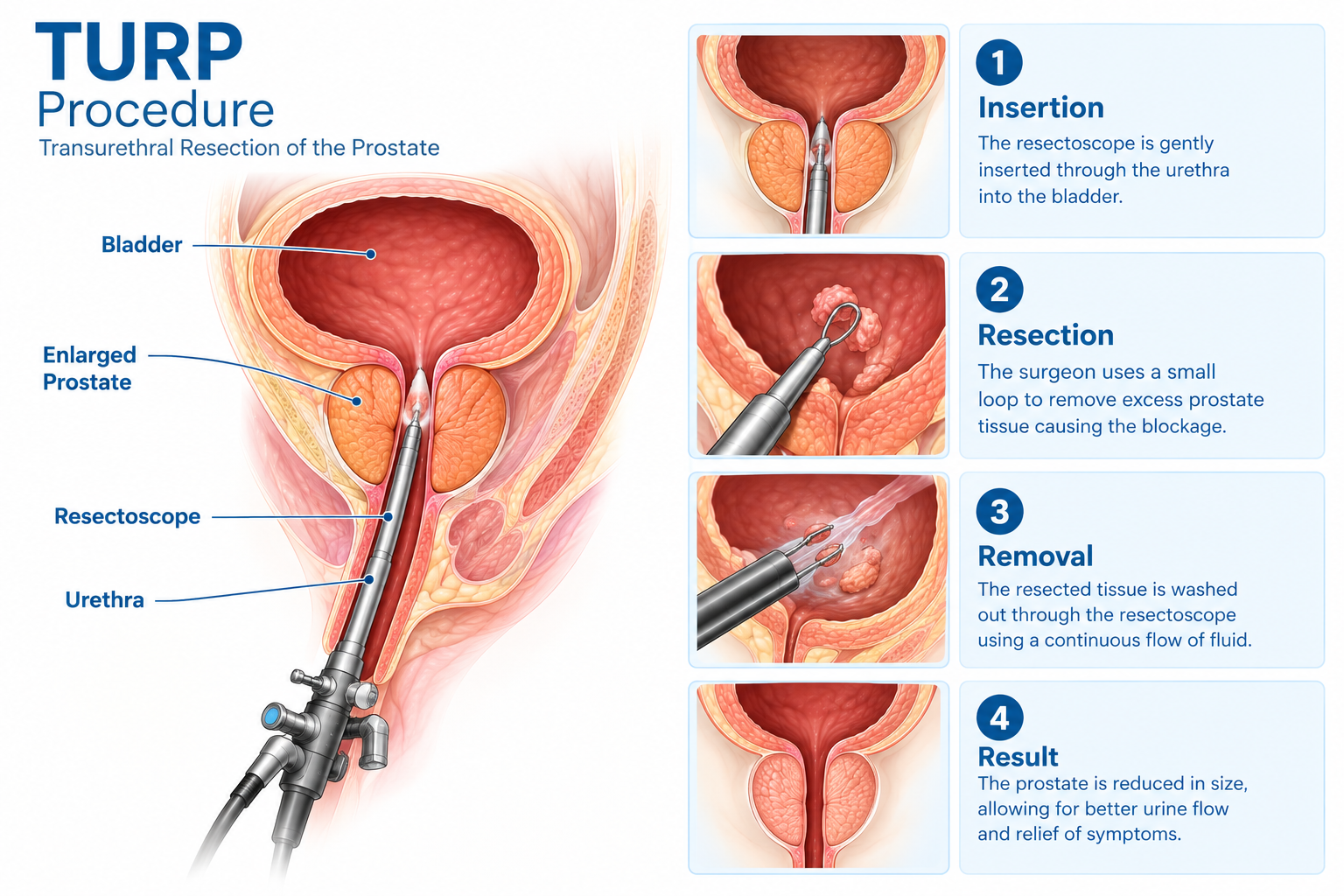
TURP is primarily used to treat an enlarged prostate that causes difficulty urinating. Common symptoms include a weak urine stream, frequent urination, difficulty starting urination, incomplete bladder emptying, and waking up multiple times during the night to urinate.
By removing excess prostate tissue that obstructs urine flow, TURP can help relieve these symptoms and improve bladder emptying. It is generally considered when medications are ineffective, symptoms are severe, or complications develop.
TURP is usually performed in a hospital or surgical center under spinal or general anesthesia. The urologist passes a thin instrument called a resectoscope through the urethra to reach the prostate. Using specialized instruments, the surgeon removes the excess tissue that is blocking urine flow without making an incision in the abdomen.
After the procedure, a urinary catheter is typically placed temporarily to drain urine and flush blood or small tissue fragments from the bladder. Patients are monitored during recovery, and the catheter is removed when the medical team determines it is appropriate.
Recovery time varies depending on the patient’s health, the amount of tissue removed, and whether complications occur. Many patients stay in the hospital for one or two days, although the length of stay may vary. Temporary urinary urgency, frequent urination, mild discomfort, or blood in the urine can occur during the early recovery period.
Most patients gradually return to their usual activities over several weeks. Strenuous exercise, heavy lifting, and sexual activity should be avoided for the period recommended by the treating urologist. Following post-operative instructions and attending follow-up appointments can help support a smoother recovery.
One of the main benefits of TURP is improved urine flow and relief from symptoms caused by an enlarged prostate. The procedure may also help reduce urinary retention and other complications associated with bladder outlet obstruction. Many patients experience meaningful improvements in their urinary function and daily comfort.
Like any surgery, TURP carries potential risks, including bleeding, infection, temporary difficulty controlling urination, narrowing of the urethra, and retrograde ejaculation, in which semen flows backward into the bladder during orgasm. Erectile dysfunction is possible but is not common. Your urologist can explain the potential benefits and risks based on your individual condition and treatment goals.