
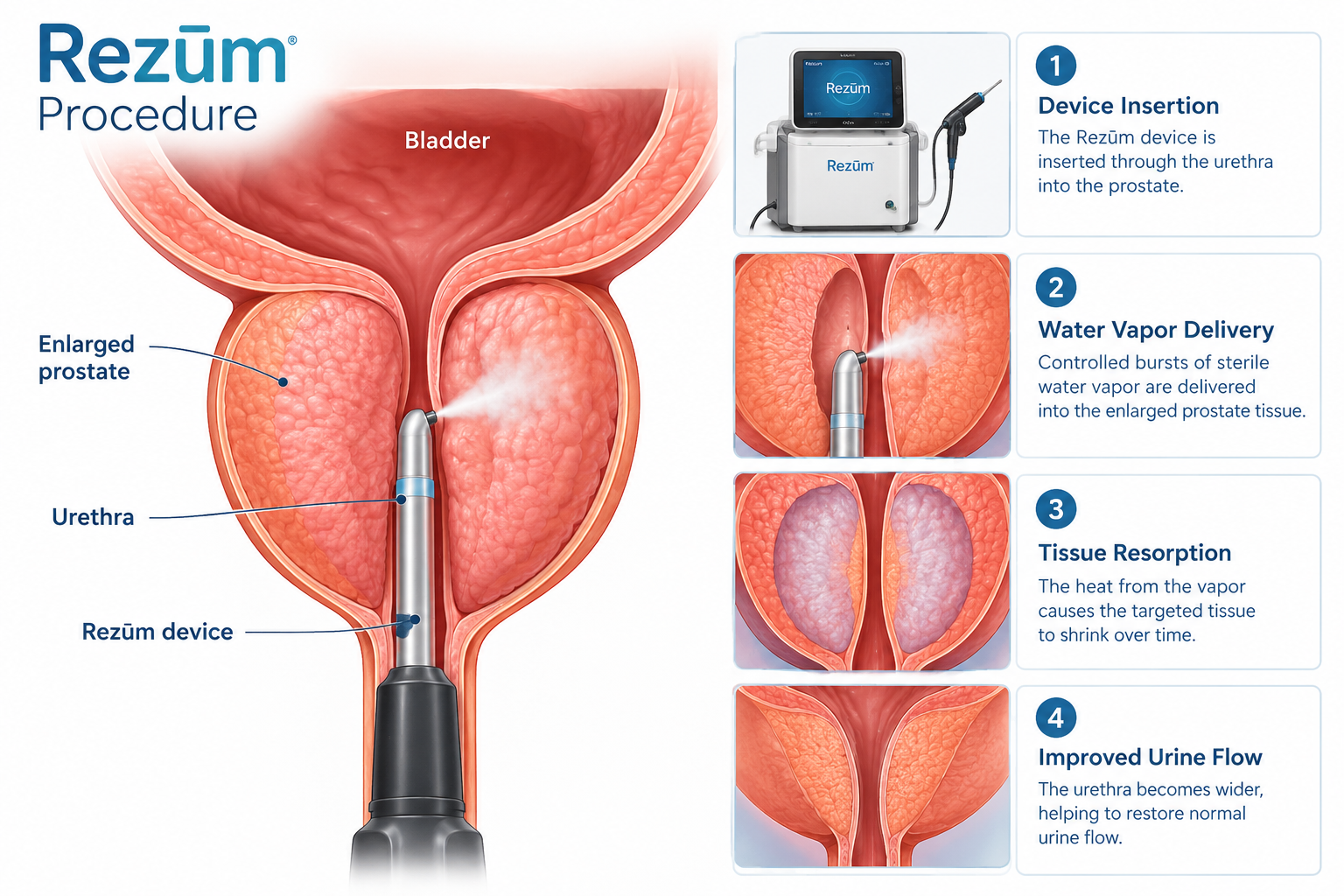
Rezūm is primarily used to treat urinary symptoms caused by an enlarged prostate, also known as benign prostatic hyperplasia (BPH). These symptoms may include frequent urination, urgency, a weak urine stream, difficulty emptying the bladder, and waking up several times during the night to urinate.
The treatment targets excess prostate tissue using water vapor, which gradually causes the tissue to shrink. As the obstruction decreases, urine can flow more easily, helping improve urinary function and daily comfort.
Rezūm is typically performed in an outpatient setting using local anesthesia, a nerve block, or other appropriate pain management. The urologist inserts a specialized instrument through the urethra and delivers controlled doses of water vapor into the enlarged prostate tissue. No external surgical incision is required.
The body’s natural healing process gradually removes the treated tissue over the following weeks. A temporary urinary catheter may be needed after the procedure to help drain the bladder while swelling subsides and healing begins.
One major benefit of Rezūm is that it treats an enlarged prostate without requiring traditional prostate surgery. The procedure is generally brief and minimally invasive, and many patients experience improvements in urinary symptoms over time. It may also offer a lower risk of certain sexual side effects compared with some surgical treatments.
Rezūm may help reduce dependence on BPH medications for some patients while preserving sexual function, including ejaculation, in many cases. However, results vary, and some patients may continue to need medication or require additional treatment.
Recovery varies from person to person. Some patients experience temporary urinary urgency, frequent urination, burning during urination, or blood in the urine during the first few days or weeks. A urinary catheter may be required for several days, depending on symptoms and the urologist’s recommendations.
Improvements in urinary symptoms generally develop gradually over several weeks, with further benefits sometimes appearing over a few months. Patients should follow their urologist’s instructions regarding hydration, physical activity, medications, and follow-up visits to support recovery.